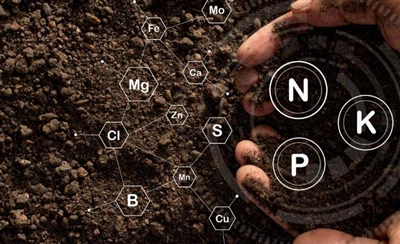
Water-soluble fertilizers and compound fertilizers are two different forms of fertilizers. Water-soluble fertilizers not only have a comprehensive range of nutrients and a high concentration, but also do not produce or contain precipitates after dissolving in water. Large element water-soluble fertilizers mainly consist of the three major elements of nitrogen, phosphorus and potassium, and also add medium and trace elements. Large element water-soluble fertilizers are quickly soluble in water and easily absorbed and utilized directly by the root system of crops. They are a type of fast-acting fertilizer. This type of fast-acting fertilizer has a rapid effect, strong fertility, and a short duration of effect.
Compound fertilizers can provide two or more elements of nutrients for crops and promote the interaction of nutrients within the crops. Compound fertilizers mainly include fertilizers with nitrogen, phosphorus and potassium. Compound fertilizers have complex compositions, a wide variety and significant differences in properties. Fertilizers such as ammonium phosphate, potassium dihydrogen phosphate and potassium nitrate, when applied to the soil, undergo a biochemical decomposition process. Through the action of soil microorganisms, the fertilizers are decomposed into nutrients that crops can absorb and utilize. Therefore, the duration of their effectiveness is longer than that of water-soluble fertilizers.
Which has a longer fertilizer effect period, water-soluble fertilizer with macronutrients or compound fertilizer?
Popular Blog Posts