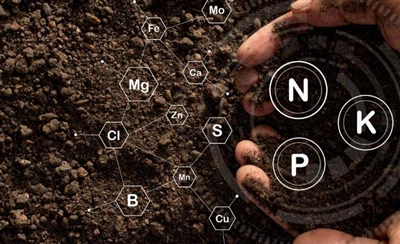
Compound fertilizers refer to chemical fertilizers that contain nitrogen, phosphorus and potassium, or any two of these three elements. Compound fertilizers obtained through chemical synthesis are called chemically synthesized compound fertilizers, in which the ratio of nitrogen, phosphorus and potassium is fixed, so they are also called universal compound fertilizers. Compound fertilizers made by secondary processing and mixing of high-concentration single-component fertilizers are called mixed compound fertilizers, and the ratio of nitrogen, phosphorus and potassium in them can be adjusted according to the specific requirements of the soil and crops.
The advantages of compound fertilizers can be summarized as follows:
(1) Comprehensive nutrients with high content. The nutrients in each compound fertilizer granule are evenly distributed. It not only provides nutrients for crops, fully exerting the mutual promotion effect among nutrient elements, but also releases nutrients evenly, with stable fertilizer efficiency and a longer supply period. Therefore, it usually has good fertilizer efficiency.
(2) Convenient to use. Compound fertilizer granules are relatively firm, dust-free, uniform in size, and have low moisture absorption. They are easy to store and apply, suitable for mechanical fertilization and also convenient for manual scattering.
(3) It has few by-products and no adverse effects on the soil. Single-component fertilizers usually contain a large amount of by-products. For example, ammonium sulfate only contains 20% nitrogen, and the large amount of sulfate ions are wasted when applied to the soil unless the soil is deficient in sulfur. Compound fertilizers contain almost all or most of the nutrients needed by plants, eliminating resource waste and avoiding the adverse effects of by-products. Most compound fertilizers contain calcium, which has a smaller acidifying effect on the soil than single-component fertilizers.
(4) Compound fertilizers have diverse ratios and can be selected and applied in a targeted manner. The main feature of compound and mixed compound fertilizers is that they are processed a second time according to the soil nutrient status, crop fertilizer requirements and farmers' demands.
Therefore, the diverse nutrient ratios of compound fertilizers can save many project expenses in fertilization practices and also enhance labor productivity.
Why are compound fertilizers superior to single-component fertilizers?
Popular Blog Posts