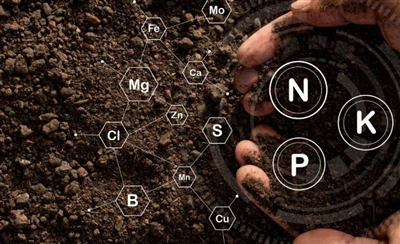
NPK compound fertilizer is an indispensable "good helper" in our daily agricultural life. If the land is to become fertile and the plants grow stronger, it is inseparable from its help. How to use NPK compound fertilizer has become our concern.
1. It should be used as base fertilizer
NPK compound fertilizer contains nitrogen, phosphorus, potassium and other nutrients, and has a long fertilizer effect. The controlled release NPK compound fertilizer adopts coating, granulation and other processes in the production process, which makes the fertilizer effect slow and stable, and decomposes slower than elemental chemical fertilizers, greatly improving the utilization rate. Rate. The crop is very sensitive to phosphorus and potassium in the early stage, and phosphorus and potassium fertilizers are required to be applied as base fertilizers early, so NPK compound fertilizers are suitable for use as base fertilizers.
When used as base fertilizer, the dosage per mu is generally 30-40 kg. NPK compound fertilizer should not be used for seedling fertilizer and middle and late fertilizer to prevent greed and growth.
2. It is necessary to choose the appropriate concentration
NPK compound fertilizers are mostly fertilizers that are configured according to the average nutrient status of soil types in a certain area and the proportion of fertilizer required by crops. The NPK compound fertilizers on the market are available in high, medium and low concentrations. Generally, the total nutrients of high-concentration NPK compound fertilizer are more than 40%, the medium concentration is 30-40%, and the low concentration is 25-30%. Fertilizer utilization.
High-concentration NPK compound fertilizer is mainly used on commercial crops, which has good quality, less residue and high utilization rate, but attention should be paid to avoid direct contact between seeds and fertilizers. The compound fertilizer needs to be kept at a distance of 5-10cm. If it is applied directly to the same hole with the seeds, it will cause fertilizer damage. If it is applied to flowers, regardless of high concentration or low concentration, attention should be paid to controlling the dosage, and it must be mixed with soil, otherwise it is easy to burn the roots, and potassium sulfate type fertilizers are used at the same time. Combination of fertilizer items, try to avoid the use of inorganic NPK compound fertilizer.
3. Pay attention to nutrients
Different NPK compound fertilizers use different raw materials and ratios. Different NPK compound fertilizers need to be selected according to soil types and crop types. Improper selection will reduce fertilizer efficiency and may poison crops in severe cases.
NPK compound fertilizer contains two or more elements, among which ammonia is volatile and easy to be lost in the presence of rain, phosphorus and potassium are easily fixed by soil, especially phosphorus has little mobility in soil, and it is not easy to apply it on the soil surface It is absorbed and utilized by the root system of crops, so NPK compound fertilizer should be deeply applied to cover the soil.
4. Pay attention to the growth period of plants
The elements required by plants at each stage are different. It not only needs nitrogen, phosphorus, potassium, but also calcium, magnesium and other elements. Therefore, different plants need to apply the elements that contain the elements required by plants in different growth periods. Therefore, if too much NPK compound fertilizer is applied, it is easy to cause the enrichment of a certain element, thereby affecting the growth of plants, and in severe cases, it can lead to burning seedlings.
Rational use of NPK compound fertilizer can bring out its best effect, so that our land will have sufficient nutrition, and plants can grow better if they have an excellent living space.