There are many types of fertilizers, and the letters on the fertilizer bags are also various, but many farmers friends do not know much about the letters on the fertilizer bags, and do not know what those letters represent.
Today, let's take a look at the specific meanings of the letters commonly found on fertilizer bags.
Summary of Common Fertilizer Packaging Bag Letters
01. NPK
In the process of using chemical fertilizers, we sometimes see some chemical fertilizer bags marked with NPK on the market. Many people are curious, what element is NPK?
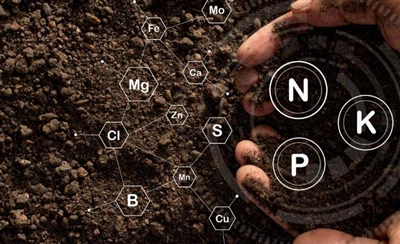
In fact, the compound fertilizers we encounter will be marked with NPK, N means nitrogen; P means phosphorus, represented by P2O5; K means potassium, represented by K2O.
02.TE
TE means that the fertilizer contains trace elements.
Manufacturers generally describe the content and form of trace elements in fertilizers in their technical manuals. The added trace elements mainly include boron, iron, zinc, copper, and molybdenum, among which the addition of chelated trace elements is the best.
For example, balanced water-soluble fertilizer: 20-20-20+TE. It means that the total nitrogen content in this water-soluble fertilizer is 20%, the content of phosphorus pentoxide is 20%, the content of potassium oxide is 20%, and it also contains trace elements.
03.EM
EM is a complex flora. We often see EM bacteria on the fertilizer bag. It is mainly composed of several major flora. All kinds of microorganisms play important roles. The core role is dominated by photosynthetic bacteria and Lactobacillus acidophilus.
04.HAK
The Chinese name of HAK is Potassium Humate. Sometimes you can see compound fertilizers containing HAK appearing on the market. Generally, they are compound fertilizers containing Potassium Humate.
The humic acid functional group in potassium humate can absorb and store potassium ions, prevent the loss with water in sandy soil and leaching soil, and prevent the fixation of potassium in clayey soil.
In addition, some parts of potassium humate are low-molecular humic acids such as fulvic acid, which can dissolve minerals such as potassium-containing silicate and potassium feldspar, and can slowly decompose to increase the release of potassium and increase the content of available potassium.