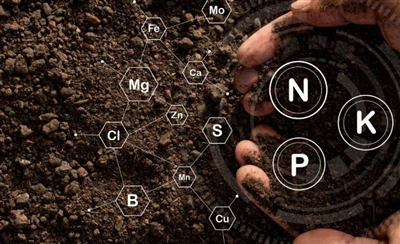
Compound fertilizers refer to chemical fertilizers containing two or more nutrient elements. Compound fertilizers have the advantages of high nutrient content, few side-components and good physical properties. They are very important for balancing fertilization, improving fertilizer utilization, and promoting high and stable crop yields. effect. So how do we choose compound fertilizers?
By crop variety
Generally, NPK compound fertilizer is used for field crops, and NPK ternary compound fertilizer should be used in high-yield wheat fields; powdery compound fertilizer is suitable for densely planted crops such as wheat, rice, and millet; Compound fertilizer: Vegetables, especially fruit vegetables, root vegetables and fruit trees and other economic crops need more, and nitrogen, phosphorus and potassium compound fertilizers with high potassium content and low nitrogen should be used.
According to soil properties
For soils that are slightly alkaline, with low organic matter content (the soil pH is generally around 8.0), and lack of available nitrogen and phosphorus, acidic compound fertilizers, such as monoammonium phosphate or humic acid NPK compound fertilizers, nitrogen and phosphorus fertilizers, should generally be used. Compound fertilizer is appropriate. However, for a few red clay or acid brown loam soil, alkaline compound fertilizers, such as diammonium phosphate, should be used.
According to the fertilization method
In order to improve the fertilizer efficiency of compound fertilizers, different application methods should choose different formulations of compound fertilizers. Granular compound fertilizer must be used as base fertilizer, and the higher the hardness of the particles, the better, and the fertilizer effect is the longest.
In the production of compound fertilizers, soil testing formulas are often used to measure soil nutrients. Soil testing and formula fertilization are based on soil testing and fertilizer field experiments. On the basis, the application quantity, fertilization period and application method of nitrogen, phosphorus, potassium and medium and trace elements are put forward. In layman's terms, it is the scientific application of formula fertilizer under the guidance of agricultural scientific and technological personnel.
The core of soil testing and formula fertilization technology is to adjust and solve the contradiction between crop fertilizer demand and soil fertilizer supply. At the same time, the nutrient elements required by crops are supplemented in a targeted manner. What elements are lacking in crops can be supplemented, and how much they need to be supplemented, so as to achieve a balanced supply of various nutrients and meet the needs of crops; to improve the utilization rate of fertilizers and reduce the amount of use, improve crops The purpose of improving the quality of agricultural products, saving labor, and increasing income.