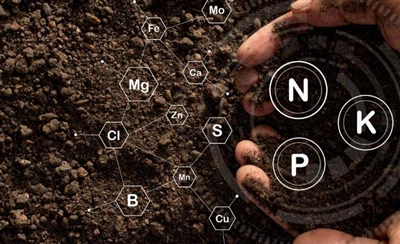
What is nitrogen fertilizer? Nitrogen fertilizers are chemical fertilizers that contain nitrogen, the nutrient element for crops. Elemental nitrogen plays a very important role in crop growth. It is a component of amino acids in plants, a component of protein, and a component of chlorophyll, which plays a decisive role in plant photosynthesis. Nitrogen can also help crops to reproduce, and the application of nitrogen fertilizer can not only improve the yield of agricultural products, but also improve the quality of agricultural products. Nitrogen fertilizer is also a kind of inorganic salt.
Nitrogen fertilizers are chemical fertilizers that contain nitrogen, the nutrient element for crops. The main functions of nitrogen fertilizer are: to increase the total biomass and economic output; to improve the nutritional value of agricultural products, especially to increase the protein content in seeds and to improve the nutritional value of food. Nitrogen is the main component of protein in crops. Without nitrogen, nitrogen white matter cannot be formed, and without protein, there can be no various life phenomena. In crops, the parts with more protein (such as seeds) also contain more nitrogen; the parts with less protein (such as senescent stems) also contain less nitrogen. Not only that, but nitrogen is also a component of chlorophyll and many enzymes. Chlorophyll is an essential substance for crops to carry out photosynthesis, and enzymes are catalysts for the transformation of various substances in crops. Nucleoproteins and plant alkaloids also contain nitrogen. It can be seen that nitrogen plays an extremely important role in crop nutrition. Crops begin to absorb nitrogen from the first true leaves.
When nitrogen fertilizer application is insufficient, crops generally show: plants are short and thin; leaves are abnormal green such as yellow-green, yellow-orange, and the basal leaves are gradually dry and withered; root branches are few; The ear differentiation is poor, the branches are few, the ear shape is small, the crop is significantly premature and mature, and the yield is reduced.
When nitrogen fertilizer is applied excessively, crops are generally manifested in: the growth is too lush, the axillary buds are constantly born, the tiller is often too much, the normal development of reproductive organs is hindered, and the maturity is delayed, the leaves are dark green, the stems and leaves are tender and juicy, and the body is soluble non-protein nitrogen. If the content is too high, it is easy to be damaged by pests and diseases, and is easy to lodging.
The most commonly used nitrogen fertilizer is urea. Urea is an organic nitrogen fertilizer, which can be absorbed and utilized by crops after being hydrolyzed into ammonium carbonate or ammonium bicarbonate by the urease reaction in the soil. Therefore, urea should be applied 4 to 8 days before the fertilizer demand period of crops. At the same time, the soil should be deeply applied. The final product of urea decomposition in the soil is ammonium carbonate. Ammonium carbonate is very unstable. It decomposes in the soil or on the soil surface to form free ammonia, which is volatile and lost. Like other nitrogen fertilizers, the application time of urea should be in the morning or evening, preferably after rain or cloudy days, and avoid applying it at noon on sunny days. Urea is a unit fertilizer, and should be used in conjunction with phosphate fertilizer or other chemical fertilizers, so that it can not only meet the needs of crops for various nutrients, but also play an assisting role between fertilizers.
The rational use of nitrogen fertilizers makes our crops more high-quality and high-yield.