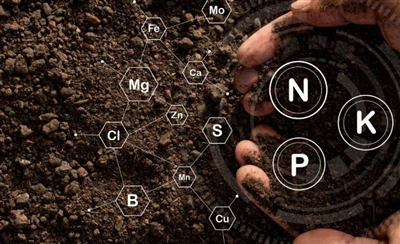
According to the 1990 data from the China Agricultural Yearbook, China has about 340 million pigs, nearly 100 million cattle, and 27 million horses, mules, and donkeys. These livestock excrement is large in quantity and rich in nutrients, making it the largest organic fertilizer resource in rural China. Among them, pigs can provide more than 1.3 million tons of nitrogen, 850,000 tons of phosphorus and 1.8 million tons of potassium each year for agricultural production; large livestock can provide more than 1.6 million tons of nitrogen, 830,000 tons of phosphorus, and more than 1.1 million tons of potassium. In addition, there are more than 3 billion poultry and more than 1 billion rabbits every year, and the nutrients provided by them account for 63% to 72% of the total rural organic fertilizer.
Crop straw is also an important source of organic fertilizer. It is rich in nutrients, has a wide source and a large quantity, and can be directly returned to the field. It is also an important raw material for heap, compost and livestock. China's main crop straws produce an average of more than 400 million tons per year. According to the return rate of rice straw 30%, wheat straw 45% and corn straw 20%, 1.3% of the straw can be used as organic fertilizer every year. More than 100 million tons, about 660,000 tons of nitrogen, 400,000 tons of phosphorus, and 106,000 tons of potassium.
China's annual total production of various organic fertilizers reaches 1.8 to 2.4 billion tons, of which 16.78 million tons of nitrogen, phosphorus and potassium nutrients are contained. These numbers are only rough estimates. With the increase of population, the development of agriculture and animal husbandry, and the improvement of people's living standards, the quantity and quality of organic fertilizers have changed a lot. According to the 1998 China Agricultural Yearbook, China's population was 1.2058 billion, 1.062 times that of 1989, an increase of 102.3 million people; grain output was 494.2 million tons, 1.12 times that of 1989, an increase of 79.75 million tons, and the number of pigs, cattle and sheep sold was 63,722.1 10,000 heads, 1.673 times that of 1989, an increase of 256.33 million heads. The output of poultry eggs was 21.254 million tons, 2.95 times that of 1989, an increase of 14.056 million tons. The increase of population, livestock and poultry quantity and grain output will inevitably increase the quantity of human, livestock, poultry manure and crop straw. Therefore, the total annual production of various organic fertilizers in China may be far more than 1.8 to 2.4 billion tons, of which the nitrogen, phosphorus and potassium nutrient content should also exceed 16.78 million tons. According to the forecast of the Ministry of Agriculture of the People's Republic of China at the end of the 20th century, the total amount of nitrogen, phosphorus and potassium nutrients in China's organic fertilizers reached 1971-2087±917,000 tons. In short, China's organic fertilizer is a huge resource, and it is continuously produced every year, and it will become a material guarantee for the development of agricultural production if it is used properly.