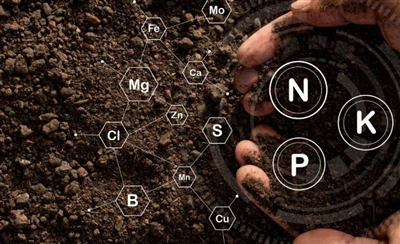
1. Complete nutrition and long-lasting fertilizer effect. Organic fertilizers contain organic nutrients such as amino acids, proteins, and sugars, as well as N, P, and K, as well as intermediate elements (Ca, Mg, S, etc.) and trace elements (Fe, Mn, Cu, Zn, etc.) that are beneficial to crop growth. . On the premise of greatly increasing the organic matter and nitrogen, phosphorus, potassium, calcium, magnesium and various trace elements in the soil, compared with chemical fertilizers, organic fertilizers are slowly decomposed in the soil, and the fertilizer effect is longer. .
2. Fertilizer and water retention and buffering effect. Most of the organic components in organic fertilizers are hydrophilic colloids, which have a strong absorption effect on water. Therefore, the application of organic fertilizers is beneficial to the soil to maintain soil moisture. Generally speaking, the water absorption of pure soil particles is up to 50-60%, but the water absorption of humus is as high as 400-600%. Moreover, the humus in the organic fertilizer combines with various cations in the soil to form a weak organic acid salt and the humus constitute a buffer system, which plays an important role in alleviating changes in soil pH and ensuring a normal growth environment for crops. At the same time, organic fertilizer can also convert many original heavy metals in the soil into forms that are difficult to move and absorb by plants, and play a role in purifying the soil.
3. Adjust soil physical and chemical properties and improve soil structure. Organic fertilizers can significantly increase soil organic matter, and organic matter, as an important type of soil particle binder, plays an important role in the formation and maintenance of soil structure. The size of soil particle agglomeration is closely related to organic matter, the change of soil structure stability depends on the change of each component of organic matter, and the decomposition of organic matter is beneficial to the change of aggregate stability. As the final product of organic matter conversion, humus is beneficial to the long-term stability of microaggregates, while biological polysaccharides play the role of clustering microaggregates into macroaggregates. It is precisely because of this function of organic fertilizer that organic fertilizer plays an important role in regulating the contradiction between soil water, fertilizer, gas and heat, and improving the health and quality of soil.