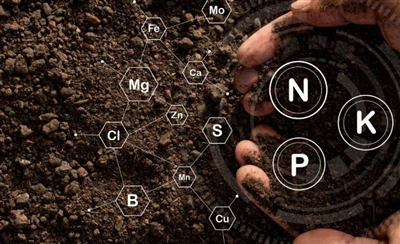
In 1828, German chemist F. Wöhler (1800-1882) synthesized urea artificially for the first time in the world. According to the "vitality theory" popular in the chemical industry at that time, organic substances such as urea contained certain vitality, which could not be synthesized artificially. Weiler's research broke the absolute boundary between inorganic and organic matter. But people did not realize the fertilizer use of urea at that time. It was not until more than 50 years later that synthetic urea was put on the market as a fertilizer. In 1838, British squire L.B. Ross (L.B. Ross) treated phosphate rock with sulfuric acid to make phosphate fertilizer, which became the world's first chemical fertilizer. In 1840, the German chemist J.von Liebig (1803-1873) published the book "Applications of Chemistry in Agriculture and Physiology", which created the theory of plant mineral nutrition and the theory of return, which completely denied the prevailing theory at the time. The two major plant nutrition theories, humus and vitality, laid the theoretical foundation for the invention and application of chemical fertilizers. Liebig also invented potash in 1850. Around 1850, Routh invented the earliest nitrogen fertilizer. In 1909, the German chemist F. Haber (1868-1934) and Bosch (C. Bosch, 1874-1940) co-founded the "Haber-Bosch" ammonia synthesis method, which solved the problem of large-scale production of nitrogen fertilizer. technical problem. Since the 1950s, the application of chemical fertilizers has been widely used. According to statistics, chemical fertilizers account for about 30% of the various measures to increase agricultural production.
Fertilizer synthesis
Popular Blog Posts