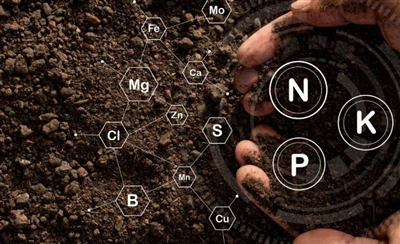
For thousands of years, both Europe and Asia have used manure as the main fertilizer. After entering the 18th century, the world’s population has grown rapidly, and the industrial revolution that broke out in Europe has caused a large influx of people into cities, aggravating food supply tensions and becoming a cause of social unrest. Chemists began to conduct scientific research on the nutrition of crops in the middle of the 18th century. The two main plant nutrition theories that were popular in the early 19th century are the "humus" theory and the "viability" theory. The former believes that the carbon required by plants does not come from carbon dioxide in the air, but from humus; the latter believes that plants can use their own unique vitality to make plant ash. In 1840, the famous German chemist Liebich published the book "Application of Chemistry in Agriculture and Physiology", and established the theory of plant mineral nutrition and the theory of return. He believed that only minerals are the only nutrients for green plants, and organic matter can only be used as the only nutrients. It has nourishment effect on plants when it decomposes and releases minerals. Liebig also pointed out that the mineral nutrients that crops absorb from the soil must be returned to the soil in the form of fertilizer, otherwise the soil will become increasingly barren. This negated the doctrines of "humus" and "viability", caused a revolution in agricultural theory, and provided a theoretical basis for the birth of chemical fertilizers.
Modern History of Fertilizer
Popular Blog Posts