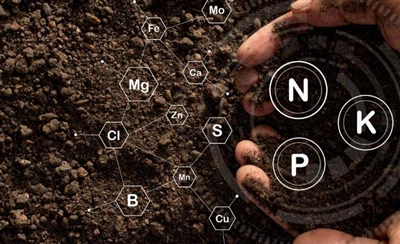
If you select the right fertilizer, your crops will grow vigorously; if you choose the wrong one, it will cost you money and affect your harvest. Learning to choose fertilizer is a key skill for growing good crops.
1. First, look at the packaging: Check if the documents are complete
When buying fertilizer, the first thing you do is look at the packaging. For genuine good fertilizer, the "identity card" must be complete. The packaging must clearly print the following items:
Nutrient content: For example, nitrogen fertilizer should indicate "nitrogen (N) ≥ 46%", and compound fertilizer should clearly state the contents and total of nitrogen, phosphorus, and potassium (N\P\K), with the numbers being as clear as possible. If they are blurry or only say "total nutrients" without individual nutrients, they are likely to be problematic.
Production information: It must have the production license number, the standard number for implementation, the production date, and the shelf life. Any "three-no products" without these cannot be accepted.
Manufacturer information: Regular manufacturers will print detailed addresses and contact information. Brands that can be verified are more reassuring. Those that only print a vague name and have no phone number should be cautious.
2. Then, look at the appearance: Good fertilizer can be identified at a glance
When you receive the fertilizer, don't rush to buy it. First, handle it and observe it:
Solid fertilizer: Look at the particle size and color. Good fertilizer has uniform particles and the same color (for example, urea is white or light yellow, and potassium fertilizer often has a tint of red). It should not clump or stick to your hand. If it crumbles easily, clumps hard to break, or has a colorful appearance, it may have impurities.
Liquid fertilizer: For liquid fertilizers like ammonia water and foliar fertilizers, the high-quality ones should be clear and transparent, without sediment or stratification. Pour a little into water and it should dissolve quickly, and the water should still be clear. If it is murky, has sediment at the bottom, or has a lot of debris, it is likely to be of poor quality.
3. Check if it suits the crops and the soil: Choose fertilizer that is suitable for your land and crops
Fertilizer does not have a "universal type". The one that suits your land and crops is the good one:
Check the "appetite" of the crops: Leafy vegetables (such as cabbage and spinach) love nitrogen, so choose fertilizer with a high nitrogen content; fruit-bearing ones (tomatoes, fruit trees) need a balanced nitrogen, phosphorus, and potassium, so choose compound fertilizer; leguminous crops (such as soybeans and peanuts) have a "nitrogen factory" (rhizobia) in their roots, so don't apply too much nitrogen fertilizer; apply more phosphorus and potassium to be more cost-effective.
Check the "temperament" of the soil: Acidic soil (such as red soil in the south) should not use acidic fertilizers; choose fertilizers with a slightly alkaline nature (like sodium nitrate); sandy soil has poor retention of nutrients, so use slow-release fertilizers to avoid loss; salt-alkali soil cannot use fertilizers containing sodium (such as sodium nitrate), otherwise the soil will become more "clayey" with each application.
4. Calculate the cost: Don't just focus on the price; consider the cost-effectiveness
Some farmers only consider the price when buying fertilizer, but the situation where "cheap is bad" is very common:
Calculate the nutrient cost: For example, two types of nitrogen fertilizers, one costs 100 yuan with 46% nitrogen content, and the other costs 80 yuan with 30% nitrogen content. It seems that the second one is cheaper, but when calculated, the "nitrogen per kilogram" price is actually higher, and there may be weight discrepancies.
Consider the long-term effect: Good fertilizer used over time will make the crops grow steadily (not overgrown, not prone to lodging), and the fruits will have good quality (taste is good, and can be stored for a long time). Those with leaves suddenly turning green but lacking stamina may be inferior fertilizer with "strong ingredients", and they are prone to losing nutrients later.
5. Protect the land: Don't let fertilizers harm the land and the crops
Prevent "burning the seedlings": If there are too many "impurities" in the fertilizer (such as chloride ions, heavy metals), it will burn the root system of the seedlings. For those who grow tobacco or grapes, don't use fertilizers with high chloride content like ammonium chloride; for those who grow vegetables, choose fertilizers with standards for heavy metals.
Protect the land: Long-term use of unqualified fertilizers will make the land become acidic and hard. Choosing regular fertilizers not only makes the crops grow well but also protects the soil fertility, so our land can be cultivated for a long time.
6. Remember one thing: Buy from a regular channel and get guaranteed after-sales service
It is best to buy fertilizer from specialized agricultural supply stores or supply cooperatives. Don't buy "private fertilizer" from mobile vendors at a low price. When purchasing, be sure to get an invoice or receipt. In case the fertilizer has any problems, you can use the receipt to explain your situation to the merchant and also file a complaint with the agricultural department.
Selecting fertilizers is like choosing "food" for crops. Be more careful and compare carefully to select good fertilizers that not only nourish the crops but also the land. Remember these tips, and we farmers will have more confidence in farming, and the harvest will naturally be good!