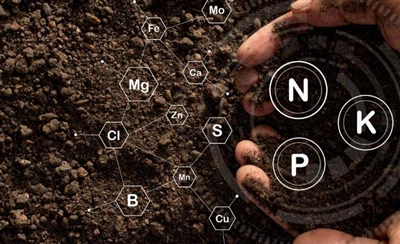
The three major nutrients NPK, namely nitrogen (N), phosphorus (P) and potassium (K), are indispensable nutrients for plant growth.The absence of these elements will affect the growth process of crops. The following are some external symptoms.
1.Symptoms of nitrogen (N) deficiency:
The leaves turn yellow:Nitrogen is an essential element for the synthesis of chlorophyll. Nitrogen deficiency will lead to a decrease in chlorophyll content, yellowing of leaves and even leaf wilting.
Growth retardation:The deficiency of nitrogen can lead to slow growth in plants, resulting in stunted development, reduced height, fewer branches, and a decrease in yield.
Weak stems:Lack of nitrogen will cause the stems to be weak and slender, prone to bending and collapsing, thereby affecting the yield and quality of crops.
The fruits are small and shriveled:Lack of nitrogen will cause the fruits to be small and of poor quality, and even affect their commercial value.
2.Symptoms of phosphorus (P) deficiency
The leaves turn red:Lack of phosphorus will cause the leaves to turn red, especially at the leaf margins and between the veins.
The leaves turn purple:Plants lacking phosphorus will also turn purple. This is because phosphorus is involved in the synthesis process of chlorophyll. The deficiency of phosphorus will lead to a reduction in the amount of chlorophyll synthesized.
Slowly growing:Slow growth, short plants, weak stems, and fewer branches.
Poor fruit development:The fruits will develop poorly, be small in size, have a low yield, mature late and have a poor quality.
3.Symptoms of potassium (K) deficiency
The edges of the leaves show a yellowish-brown color:Potassium is an essential element for plants to carry out photosynthesis. Lack of potassium will cause the edges of the leaves to turn yellowish-brown and burn, and then gradually spread to the veins between the leaves.
Poor fruit development:The fruits will be small and deformed, with dull skin color, which will affect the yield and quality of the fruits.
Decline in stress resistance: Lack of potassium can make plants more vulnerable to pests and diseases, affecting their growth and yield.
Weak stems:Potassium is involved in the formation of plant cell walls. Lack of potassium will cause the stems to be slender and weak, prone to bending and lodging, thereby affecting the growth and development of crops.
Attention
The manifestation of nutrient deficiency symptoms often reflects the complex interplay between nitrogen, phosphorus and potassium elements and the growth rhythm of plants. For instance, during the vegetative growth stage, the nitrogen requirement for leaf expansion reaches its peak, which makes yellowing symptoms more obvious in young leaves. Phosphorus deficiency symptoms usually occur at the beginning of flowering, as phosphorus plays a crucial role in energy transfer; while potassium-related leaf scorching phenomena intensify during fruit ripening, when the demand for osmotic regulation increases significantly.
Symptoms of nutrient deficiency may vary depending on soil type and cultivation system. In sandy soil with loose texture and easily leached nutrients, symptoms of potassium deficiency tend to appear earlier and be more severe. For root and stem crops like potatoes or carrots, phosphorus deficiency not only causes the leaves to turn purple but also leads to irregular shapes of the tubers. On the contrary, under nitrogen limitation conditions, leafy and leaf-sensitive crops (such as spinach and lettuce) will exhibit a phenomenon of accelerated loss of chlorophyll.
Sustainable restoration strategies
Comprehensive approaches can achieve better restoration effects than isolated nutrient supplementation:
Nitrogen: Combine organic amendments (compost) with controlled-release fertilizers to reduce leaching
Phosphorus: Apply mycorrhizal fungus agent low pH soils to improve phosphorus utilization
Potassium: Implement split applications and foliar spraying during critical growth periods
Conclusion
From the above text, it can be seen that the three elements, NPK, play indispensable roles in the growth process of plants.Early nutritional deficiency can often be reversed by timely remedial measures, so it is necessary to pay attention to the external symptoms of plants. NPK fertilizers play a key role in supporting the healthy growth and development of plants. By providing essential nutrients such as ammonia, phosphorus and potassium, these fertilizers help promote strong root systems, healthy leaves and abundant fruit or flower production.