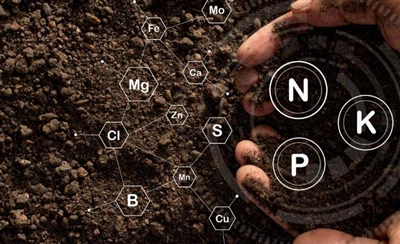
Compound fertilizers possess the advantages of high nutrient content, low impurities and good physical properties. They play a very important role in balanced fertilization, improving fertilizer utilization rate and promoting high-yield and stable-yield of crops. However, the nutrient ratios of compound fertilizers are usually fixed, while the types, quantities and ratios of nutrients required by different soils and crops are diverse. Therefore, it is best to conduct soil tests before application to understand the texture and nutritional status of the field soil. In addition, it is also necessary to pay attention to reasonable combination and application with single-element fertilizers to achieve better results.Here are some important points to note:
1.Note the application time.
Compound fertilizers have long-lasting effects and are suitable for use as base fertilizers. Processed and granulated compound fertilizers decompose more slowly than powder fertilizers, are less prone to loss and volatilization, and have a longer duration of effect. They are easy to use as base fertilizers, with a general application rate of 30-40 kilograms per mu. Compound fertilizers should not be used for seedling fertilizer or middle and late-season fertilizer to avoid the occurrence of excessive stem and leaf growth in crops; or when it is time for them to turn yellow and mature, the stems and leaves remain lush and green.
2.It should be used in combination with elemental ammonium fertilizer.
During the seedling stage of crops, the requirement for nitrogen fertilizer is relatively low. Therefore, for crops that use compound fertilizer as the base fertilizer at sowing time, according to the nutrient requirements of different crops, timely supplementary of quick-release nitrogen fertilizer should be made during the topdressing to meet the nutritional needs of the crops.
3.Be sure to choose the appropriate concentration.
Most compound fertilizers are formulated based on the average nutrient status of the soil type in a certain area and the fertilizer requirement ratio of major crops. There are high, medium and low concentration series of compound fertilizers available on the market. Generally, the total nutrient content of low concentration is between 25% and 30%, that of medium concentration is between 30% and 40%, and that of high concentration is above 40%. Depending on the region, soil type and crops, choose the economically efficient compound fertilizer that suits your needs.
4.It is imperative to avoid direct contact between seeds and fertilizers, and also to refrain from using fertilizers in combination with seeds.
The nutrient content of compound fertilizers is very high. If they come into direct contact with the roots of seeds or seedlings, it will affect the emergence of seedlings and even cause root burn or root rot of seedlings. When sowing, the distance between the compound fertilizer applied by hole seeding or strip seeding and the seeds should be at least 5 to 10 centimeters. Do not apply fertilizers directly in the same hole as the seeds; otherwise, it may cause damage to the fertilizers.
5.Attention should be paid to the application scope of nutrient components.
The raw materials used for different brands and different concentrations of compound fertilizers vary. In production, the choice of application should be based on soil type and crop type. Compound fertilizers containing nitrate ions should not be used in leafy vegetables and paddy fields; compound fertilizers containing ammonium ions should not be applied on saline-alkali land; compound fertilizers containing potassium chloride or chloride ions should not be used on crops that are sensitive to gases or on saline-alkali land; compound fertilizers containing potassium sulfate should not be used in paddy fields and acidic soil. Otherwise, the fertilizer efficiency will be reduced and even the crops may be poisoned.