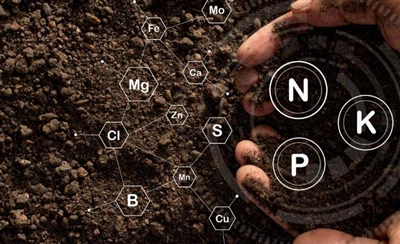
NPK fertilizers, which contain the three major nutrients - nitrogen (N), phosphorus (P), and potassium (K) - are indispensable "food" in modern agricultural production. Their scientific production and rational application directly affect crop yields and soil health. This article will provide a comprehensive analysis from production methods, characteristics, and application points.
I. Core Production Techniques
1. Blending Method (Mixing Method) - A Flexible "Nutrition Puzzle"
This method involves physically mixing single fertilizers such as urea (nitrogen fertilizer), superphosphate (phosphorus fertilizer), and potassium chloride (potassium fertilizer) in precise ratios based on crop needs. This "building block" approach does not require complex chemical reactions and can quickly respond to the nutrient demands of different soils and crops, making it particularly suitable for personalized fertilizer services. However, it is important to note that the uniformity of the mixed particles may be insufficient, and stratification may occur during transportation.
2. Granulation Method - A Classic Particle Formation Technology
The crushed raw materials are moistened with water or steam and then rolled and rubbed in a drum granulator to form particles. After drying and screening, the finished product is obtained. This method is suitable for a wide range of raw materials and has moderate particle strength, making it a common process for small and medium-sized enterprises; however, it has high energy consumption and requires regular equipment maintenance to ensure particle quality.
3. Tower Granulation Method - High-Temperature Refining for High Efficiency
The raw materials are heated to a molten state and sprayed into a granulation tower through a nozzle, where they solidify in the air to form spherical particles. The fertilizer produced by this process has round particles, uniform nutrient distribution, and strong solubility, making it commonly used in high-end compound fertilizer production. However, the high-temperature operation leads to high energy consumption and strict requirements for equipment's high-temperature resistance.
4. Ammoniation Granulation Method - Chemical Reaction-Driven Innovation
This method involves reacting phosphoric acid with liquid ammonia to form ammonium phosphate as the core, and then mixing it with potassium fertilizer to form granules. The heat released during the reaction can be used for drying, reducing energy consumption; at the same time, the ammoniation process makes the fertilizer's pH more stable, reducing adverse effects on the soil. Currently, this process is increasingly used in large fertilizer enterprises due to its high efficiency and energy conservation.
5. Extrusion Method - "Cold Granulation Core"
After pre-treatment (crushing, screening), the raw materials enter an extruder, where they are tightly combined under the pressure of rollers, screws, and other components, and then extruded through a mold and cut into particles. After screening and cooling, the finished product is obtained. This method does not require high-temperature reactions, reducing energy consumption and exhaust emissions; it uses little or no binder, reducing pollution.
II. Scientific Application: Ensuring Every Nutrient Reaches Its Target
Select the formula based on the crop: Leafy vegetables require high nitrogen, so high-nitrogen NPK fertilizers are preferred; root and stem crops have a high demand for potassium, so high-potassium formulas are suitable; during the flowering period of fruit trees, increasing phosphorus can improve fruit setting rates.
Adjust the application amount based on soil conditions: For acidic soils, physiologically alkaline fertilizers (such as potassium nitrate) should be preferred; in saline-alkali land, potassium chloride should be avoided to prevent salt accumulation.
Master the correct application timing: Deep application of base fertilizer can provide long-term nutrition; when applying top dressing, control the amount and combine with irrigation to avoid burning the seedlings; water-soluble fertilizers can be applied through drip irrigation systems to achieve water and fertilizer integration and improve utilization rates.
III. New Trends in Green Production
With the upgrading of environmental protection requirements, NPK fertilizer production is accelerating its transformation towards low carbon: for example, the blending method reduces raw material waste through intelligent fertilization; the ammoniation granulation process optimizes the tail gas treatment system to reduce ammonia emissions; some enterprises are exploring the conversion of industrial waste (such as phosphogypsum) into fertilizer raw materials to achieve resource recycling.
Understanding the production methods and application points of NPK fertilizers not only helps farmers use fertilizers scientifically and increase production and income but also contributes to the sustainable development of the industry. In the future, with technological innovation, NPK fertilizers will find a better balance between ensuring food security and protecting soil health.