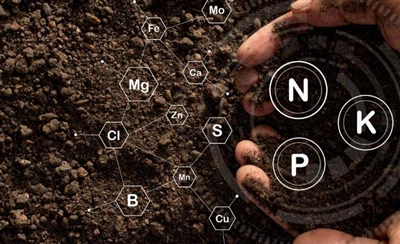
The so-called organic-inorganic compound fertilizer refers to a compound fertilizer containing organic substances and inorganic nutrients. Organic substances are mostly processed organic fertilizers (such as livestock and poultry manure, urban garbage, sludge, straw, sawdust, food processing waste, etc.), as well as substances containing organic matter (peat, lignite, weathered coal, humic acid, etc.) and some microbial agents and growth-stimulating substances are also added, which are called organic active fertilizers or bio-slow-release fertilizers. The inorganic nutrient part is mainly chemical fertilizers.
Strictly speaking, organic-inorganic compound fertilizer does not belong to organic fertilizer. It is a new type of fertilizer that lies between organic fertilizer and inorganic fertilizer and possesses the dual characteristics of both organic and inorganic fertilizers. Organic-inorganic compound fertilizer is a kind of fertilizer that is expected to be accepted by farmers and has promising prospects.
Advantage
Balanced nutrient supply and high fertilizer utilization rate
Organic-inorganic compound fertilizers contain both organic and inorganic components, thus integrating the advantages of organic fertilizers and inorganic fertilizers. The quick-release nutrients derived from inorganic fertilizers are regulated by organic fertilizers, presenting a fast but not excessive supply characteristic to plants; while the slow-release nutrients derived from organic fertilizers can ensure the sustained supply of fertilizer nutrients. The combination of the two makes the fertilizer have the characteristics of balancing urgency and stability, achieving the purpose of balanced and efficient fertilizer supply.
Improving soil environment and activating soil nutrients.
Organic-inorganic compound fertilizers have the function of improving soil fertility because they contain a large amount of organic matter, which can play a role in improving the physical and chemical properties and biological characteristics of the soil. Through these biochemical reactions, the nitrogen, phosphorus, potassium, boron, zinc, manganese and other nutrients in the soil can be activated.
On the one hand, organic-inorganic compound fertilizers can enhance the activity of microorganisms in the soil, promote the decomposition of organic matter and the effective activation of mineral phosphorus and potassium, and the balanced release of various nutrients; on the other hand, organic-inorganic compound fertilizers can regulate the pH value of the soil to a certain extent, keeping it within the range conducive to the activation of most nutrients.
Organic-inorganic compound fertilizers have physiological regulatory effects
Because the organic components in organic-inorganic compound fertilizers contain a considerable amount of physiological active substances, in addition to providing nutrients for plants, they also have unique physiological regulatory effects. They can promote the respiration and nutrient absorption of plant roots and the photosynthesis on the leaf surface, providing a strong guarantee for the growth and development of plants.