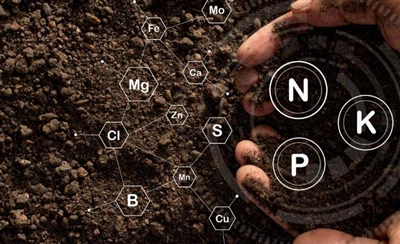
Compound fertilizers are fertilizers that contain two or more of the three essential elements of nitrogen, phosphorus, and potassium in one fertilizer. Compound fertilizers containing any two elements are called binary compound fertilizers; those containing all three elements are called ternary compound fertilizers. Compound fertilizers are divided into chemical compound fertilizers and mixed compound fertilizers. Mixed compound fertilizers are made by mixing two or more salts in a certain proportion, and the resulting fertilizer is a mixture. There is no significant difference in fertilizer efficiency between chemical compound fertilizers and mixed compound fertilizers. So what are the components of compound fertilizers? Let's take a look together!
Common compound fertilizer components:
1. Rice-specific fertilizer: Made from urea, ammonium phosphate, and potassium chloride as the main raw materials, with an effective nutrient content of nitrogen, phosphorus, and potassium ≥ 25%. It can be used as base fertilizer or top dressing. Generally, the application rate is 60-75 kilograms per mu, with 60-70% as base fertilizer and 30-40% as top dressing.
2. Bamboo-specific fertilizer: Made from urea, ammonium phosphate, and potassium chloride as the main raw materials, with an effective nutrient content of nitrogen, phosphorus, and potassium ≥ 28.5%. Apply 50 kilograms per mu, and apply it in May and June along with weeding by furrow application or trench application.
3. Tea-specific fertilizer: Made from urea, ammonium phosphate, potassium sulfate, and appropriate amounts of magnesium and boron and other medium and trace elements as the main raw materials, with an effective nutrient content of nitrogen, phosphorus, and potassium ≥ 25.0%. The application rate is determined based on the dry tea yield per mu of mature trees. Generally, for dry tea yields of 50, 100, and 150 kilograms per mu, apply 70, 90, and 120 kilograms of specific fertilizer, respectively. Apply 50% of the total amount one month before spring tea picking, 25% after spring tea picking, and 25% 15-20 days before autumn tea picking.
4. Tobacco-specific fertilizer: Made from urea, ammonium phosphate, and potassium sulfate as the main raw materials, with an effective nutrient content of nitrogen, phosphorus, and potassium ≥ 36%. Generally, for medium-fertility fields, apply 50 grams per plant when transplanting tobacco by furrow application.
5. Potassium sulfate fruit tree fertilizer: Made from urea, ammonium phosphate, and potassium sulfate as the main raw materials, with an effective nutrient content of nitrogen, phosphorus, and potassium ≥ 36%. Apply 3-4 kilograms per plant per year for mature trees, evenly distributed near the drip line of the tree crown. Ring application, circle application, or furrow application can be used, with a trench depth of 30 cm.
6. Pollution-free vegetable fertilizer: Made from urea, ammonium phosphate, and potassium sulfate as the main raw materials, with an effective nutrient content of nitrogen, phosphorus, and potassium ≥ 35%. For fruits and vegetables, apply 80-150 kilograms per mu per crop, with 30-60 kilograms as base fertilizer and 50-90 kilograms as top dressing. For leafy vegetables, apply 60-120 kilograms per mu per crop, with 15-40 kilograms as base fertilizer and 40-80 kilograms as top dressing.
7. High-concentration compound fertilizer: Made from urea, ammonium phosphate, and potassium chloride as the main raw materials, with an effective nutrient content of nitrogen, phosphorus, and potassium ≥ 45%. It can be used as base fertilizer or top dressing. The application rate should be determined based on soil fertility, crop type, and other factors.
The above is an introduction to the relevant knowledge of compound fertilizers. If you want to learn more about the market conditions of agricultural supplies, you can visit the website to learn more. After following, you can also leave a message to reply with the industry information you want to know.