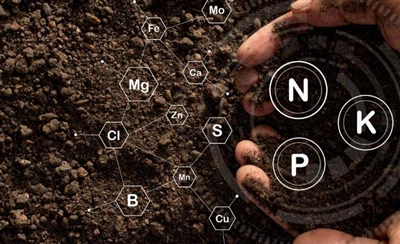
NPK fertilizers are one of the most common and widely used types of fertilizers in agriculture. The term "NPK" refers to the three primary nutrients required by plants for healthy growth: Nitrogen (N), Phosphorus (P), and Potassium (K). These three elements are crucial for various plant functions, and their presence in balanced amounts can significantly improve soil fertility, crop yield, and overall plant health. NPK fertilizers are formulated to provide these essential nutrients in a form that is easily absorbed by plants. This article will explore the key chemicals present in NPK fertilizers and the role each of these chemicals plays in plant growth.
1. Nitrogen (N) – The Growth Promoter
Nitrogen is one of the most critical elements for plant development, as it is a key component of amino acids, proteins, and chlorophyll, which are vital for photosynthesis. In an NPK fertilizer, nitrogen is typically provided in one of the following forms:
Ammonium Nitrate (NH₄NO₃): This is a widely used nitrogen source that contains both ammonium (NH₄⁺) and nitrate (NO₃⁻) ions. The ammonium form provides a slow-release nitrogen source, while the nitrate form is readily available for immediate absorption by plants.
Urea (CO(NH₂)₂): Urea is another common nitrogen source in NPK fertilizers. It contains 46% nitrogen and is highly soluble in water, making it an efficient source of nitrogen. Urea is typically broken down into ammonium and nitrate in the soil, providing plants with nitrogen in a form they can use.
Ammonium Sulfate (NH₄)₂SO₄: This compound provides both nitrogen and sulfur. It is particularly useful for crops grown in alkaline soils that may need sulfur to aid in the synthesis of essential plant enzymes.
Calcium Ammonium Nitrate (CAN): A form of nitrogen fertilizer that combines ammonium nitrate and calcium carbonate. It is particularly effective for crops needing both calcium and nitrogen, providing a balanced source of nutrients.
Role of Nitrogen in Plants
Promotes vegetative growth: Nitrogen stimulates the development of leaves, stems, and branches. It's particularly important in the early stages of plant growth.
Enhances photosynthesis: As a key component of chlorophyll, nitrogen is essential for the process of photosynthesis, enabling plants to produce energy from sunlight.
Boosts protein synthesis: Nitrogen is a major component of amino acids, which are the building blocks of proteins, crucial for plant structure and enzyme function.
2. Phosphorus (P) – The Root and Flower Developer
Phosphorus is essential for root development, flower formation, and overall plant energy transfer. It is a component of important plant molecules like DNA, RNA, and ATP (adenosine triphosphate), which is involved in energy storage and transfer in cells. The primary phosphorus chemicals found in NPK fertilizers are:
Monocalcium Phosphate (Ca(H₂PO₄)₂): This water-soluble compound is commonly used to supply phosphorus to plants. It also provides calcium, which helps strengthen plant cell walls and improve overall plant health.
Diammonium Phosphate (DAP) [(NH₄)₂HPO₄]: DAP is one of the most widely used phosphorus sources in fertilizers. It contains both nitrogen and phosphorus, making it a balanced source for crops that need both nutrients. DAP is highly water-soluble, making phosphorus readily available to plants.
Triple Superphosphate (TSP) [Ca(H₂PO₄)₂·H₂O]: TSP is another popular phosphorus source that contains a high concentration of phosphate. It is used to promote strong root systems and improve flower and fruit production.
Monoammonium Phosphate (MAP) [NH₄H₂PO₄]: MAP is a common fertilizer ingredient that supplies both nitrogen and phosphorus. It is especially beneficial for crops that require early-season phosphorus.
Role of Phosphorus in Plants
Supports root development: Phosphorus promotes the growth of strong, healthy root systems, which are essential for nutrient uptake.
Enhances flowering and fruiting: Phosphorus is crucial for flower and seed production, helping plants produce a high-quality yield.
Improves energy transfer: Phosphorus is involved in the formation of ATP, which plays a vital role in energy transfer within plant cells, helping plants carry out vital functions such as nutrient uptake, growth, and reproduction.
3. Potassium (K) – The Stress Resistor
Potassium, often referred to as the "quality nutrient," is vital for overall plant health. It is involved in several physiological processes, including water regulation, enzyme activation, and stress resistance. In NPK fertilizers, potassium is typically supplied in the following forms:
Potassium Chloride (KCl): This is the most common source of potassium in fertilizers. It is highly soluble and provides potassium in a readily available form. However, the chloride ions can be detrimental to some sensitive crops, so other forms of potassium may be preferred in certain situations.
Potassium Sulfate (K₂SO₄): This compound supplies both potassium and sulfur. It is commonly used for crops that require low chloride levels, such as tobacco, potatoes, and certain fruits and vegetables.
Potassium Nitrate (KNO₃): This provides both potassium and nitrogen and is used when plants need a rapid supply of both nutrients. Potassium nitrate is especially useful for crops that are sensitive to chloride, such as fruits, vegetables, and certain ornamental plants.
Potassium Carbonate (K₂CO₃): This is a less common form of potassium fertilizer but can be used to supply potassium in situations where chloride sensitivity is a concern.
Role of Potassium in Plants
Regulates water balance: Potassium helps regulate the opening and closing of stomata, the pores on plant leaves, which control water loss and gas exchange.
Improves disease resistance: Potassium strengthens plant cell walls, making them less susceptible to diseases and pests.
Enhances photosynthesis and carbohydrate metabolism: Potassium helps activate enzymes involved in photosynthesis and energy production, which are crucial for overall plant health.
Promotes overall plant vigor: Potassium enhances the plant's ability to cope with stress, such as drought, heat, and frost, improving resilience and overall plant performance.
4. Secondary Nutrients and Micronutrients
While NPK fertilizers primarily focus on the three macronutrients-nitrogen, phosphorus, and potassium-many formulations also contain secondary nutrients and micronutrients to address specific plant needs. These include:
Calcium (Ca): Important for cell wall structure and root development.
Magnesium (Mg): A component of chlorophyll and essential for photosynthesis.
Sulfur (S): Important for protein synthesis and overall plant growth.
Micronutrients (Iron, Zinc, Copper, Manganese, Boron, Molybdenum): These are present in trace amounts but are vital for various enzymatic and physiological processes in plants.
5. Formulation and Application of NPK Fertilizers
NPK fertilizers are available in different formulations, which are often labeled with a ratio such as 20-10-10, 10-20-10, or 15-15-15. These numbers represent the percentage by weight of nitrogen (N), phosphorus (P), and potassium (K) in the fertilizer. The ideal NPK ratio depends on the specific needs of the soil, crop type, and growth stage. For example:
High nitrogen (e.g., 30-10-10) is ideal for leafy vegetables or plants that require strong vegetative growth.
High phosphorus (e.g., 10-20-10) is ideal for promoting root development and flowering.
High potassium (e.g., 10-10-20) is ideal for fruiting and flowering plants, as well as for improving stress resistance.
Conclusion
NPK fertilizers play a critical role in supporting the healthy growth and development of plants. By providing essential nutrients such as nitrogen, phosphorus, and potassium, these fertilizers help promote strong roots, healthy foliage, and abundant fruit or flower production. The chemicals used to create NPK fertilizers, including ammonium nitrate, urea, and potassium chloride, are carefully formulated to ensure that plants receive the nutrients they need in the most effective and efficient manner. Understanding the chemicals involved in NPK fertilizers helps farmers, gardeners, and agricultural professionals make informed decisions about soil management and fertilization practices, ultimately improving crop yield and plant health.